

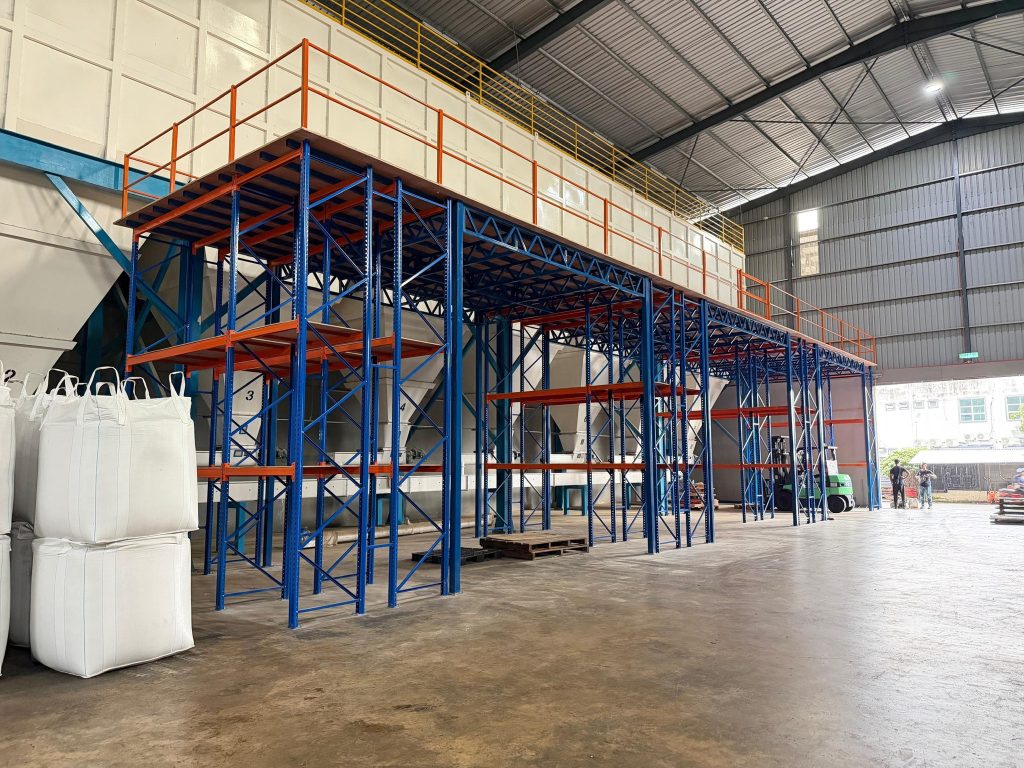
Choosing the Right Heavy Duty Racking System for Your Warehouse in Malaysia
Anyone who has managed a warehouse, factory floor, or distribution centre in Malaysia knows that storage is never just about having enough shelves. It’s about how efficiently goods move, how safely they’re stored, and how well the system adapts as operations grow. As industrial activity across Penang, Selangor, and Johor continues to expand, more businesses are re-evaluating their storage infrastructure — and heavy duty racking has become the backbone of that shift.
This article looks at what heavy duty racking actually involves, when it makes sense over other storage systems, and what to consider before investing in one for your facility.
What Makes Racking “Heavy Duty”?
Not all racking is built the same. Light duty shelving works fine for small parts, stationery, or retail displays, but it isn’t designed to carry the load or withstand the daily wear of an industrial environment. Heavy duty racking, by contrast, is engineered specifically for large, bulky, or high-weight items — think automotive parts, machinery components, raw materials, or palletised goods.
The defining characteristics usually include:
- Reinforced steel uprights and beams capable of bearing substantial loads without bending or compressing
- Adjustable shelf heights to accommodate items of varying sizes
- Open, accessible bay designs that allow forklifts or manual handling equipment to move in and out efficiently
- Modular construction that can be reconfigured or expanded as storage needs change
The goal isn’t just strength — it’s strength combined with flexibility, so the system keeps working as your inventory profile shifts over time.
Why Load Calculation Matters More Than People Think
One of the most common mistakes businesses make is assuming that “heavy duty” automatically means “strong enough for anything.” In reality, every racking system has a rated load capacity, and that rating depends on several structural factors working together — not just the thickness of the steel.
Proper load capacity is determined by:
| Factor | Why It Matters |
|---|---|
| Beam strength | Determines how much weight each shelf level can hold before deflection occurs |
| Upright stability | Affects how the frame distributes weight vertically and resists tipping |
| Weight distribution | Uneven loading can stress specific points in the frame, even within rated capacity |
| Bay spacing and depth | Impacts how loads are supported across the width of each level |
| Floor condition | Racking anchored to an uneven or weak floor can compromise the entire system’s stability |
Skipping this calculation — or relying on rough estimates — is one of the leading causes of racking failure in industrial settings. If your facility stores dense or irregularly shaped items, it’s worth having the load requirement assessed properly rather than assuming a standard configuration will do.
Heavy Duty vs. Medium Duty: Do You Need Both?
Many facilities don’t actually need uniform heavy duty racking throughout. A common and more cost-effective approach is mixing heavy duty sections for bulky or high-weight storage with medium duty sections for lighter, more frequently accessed inventory. This keeps costs sensible while still giving critical storage areas the strength they need.
A few questions worth asking before deciding:
- What’s the heaviest single load this section of racking will realistically carry?
- How often will items be added or removed — does this area need rapid access, or is it more archival?
- Is the storage area exposed to environmental factors like humidity or dust that could accelerate corrosion?
- Will pallets be involved, or is this purely shelf-based storage?
Getting these answers right upfront saves a lot of rework later, since retrofitting a racking system after installation is far more disruptive than planning it correctly from the start.
Installation, Inspection, and Long-Term Safety
Heavy duty racking is generally easy to install and dismantle compared to fixed shelving systems, which is part of its appeal for facilities that expect to reconfigure their layout over time. But ease of installation doesn’t remove the need for ongoing maintenance.
Routine inspection is essential. Over months and years of daily use, racking can develop:
- Deformation in beams or uprights from repeated overloading
- Corrosion, particularly in humid or coastal environments common across Malaysia
- Impact damage from forklifts or handling equipment
- Loosened connections at bolted or boltless joints
A simple visual inspection schedule — checking for bent components, rust spots, or misalignment — goes a long way toward extending the system’s lifespan and preventing safety incidents. Many industrial insurers and safety auditors in Malaysia now expect documented inspection records for warehouse racking, so it’s worth building this into standard operating procedure rather than treating it as optional.
Where Heavy Duty Racking Fits Across Industries
While warehouses and logistics centres are the most obvious users, heavy duty racking shows up across a surprising range of sectors:
- Manufacturing plants storing raw materials, work-in-progress components, and finished goods
- Automotive and spare parts businesses handling bulky, irregularly shaped inventory
- Retail and wholesale distribution needing organized backroom storage with fast pick access
- Archive and document storage where floor space is limited but volume is high
The common thread across all these applications is the need to maximize vertical space without sacrificing accessibility — something well-designed heavy duty racking is specifically built to solve.
Sourcing the Right System Locally
For businesses in Malaysia, working with a local supplier has practical advantages: faster turnaround on custom configurations, easier site assessments, and support that understands local facility conditions like humidity, floor types, and typical load profiles in Malaysian industrial parks. SKL Metal Systems, based in Penang, is one such manufacturer offering Heavy Duty Racking Malaysia solutions engineered for high-load industrial storage, alongside medium duty and pallet racking options tailored to different operational needs.
Whatever supplier you choose, the fundamentals stay the same: get the load requirements right, plan for future flexibility, and treat inspection as an ongoing part of warehouse safety — not an afterthought. A racking system is a long-term investment in how your operation runs day to day, and getting the foundational decisions right early on tends to pay off for years afterward.
Frequently Asked Questions (FAQs)
We store heavy industrial components. Is heavy duty racking actually strong enough for that?
Yes, generally. Heavy duty racking is specifically built with reinforced steel frames and high-capacity beams for exactly this kind of load. As long as the system is configured correctly for your weight and dimensions, it should handle machinery parts, tools, and dense inventory without issue.
How do I actually know if a rack can handle what I need to store?
It comes down to structural calculation — beam strength, upright stability, and how the weight gets distributed across the bay. Don’t just take a general “heavy duty” label at face value; ask for the specific load rating that applies to your configuration.
Can these racks also handle palletised storage?
Definitely. Most heavy duty systems are designed to be compatible with palletised goods, so they integrate well into warehouse layouts that need both high load capacity and organised storage.
Is this type of racking suitable for a manufacturing plant, not just a warehouse?
Very much so. Manufacturing environments often use heavy duty racking to store raw materials, tools, and finished products because it holds up well under continuous, demanding use.
How often should we be inspecting our racking?
Regularly — it shouldn’t be a one-time-after-installation thing. Routine checks help catch deformation, corrosion, or impact damage early, which keeps the system safe and extends how long it lasts.
If our storage needs change later, can the racking be adjusted?
Yes, that’s one of the bigger advantages of a good system. Shelf heights are typically fully adjustable, so you can reconfigure the racking as your inventory changes instead of replacing the whole structure.